

Silvie Health · Healthy ageing science
Creatine for women over 55
Why it is suddenly everywhere, what it actually does, and how to make it work for an active life.
The short version
Three grams a day is a practical, research-aligned dose. It works best alongside regular resistance exercise, and it belongs in a wider plan for muscle, bone and everyday energy.
Creatine is not just for athletes
If creatine has suddenly appeared in your news feed, Pilates studio or conversation with friends, there is a reason. Researchers are paying closer attention to how women use creatine across the lifespan, including during and after menopause. The conversation has moved well beyond bodybuilding.
For women over 55, the relevant question is not how to train like an athlete. It is how to keep doing the things that make life feel like yours: work, travel, carrying shopping, getting up from the floor, playing with grandchildren, walking hills, playing tennis, swimming, cycling, practising Pilates and moving with confidence.
Creatine can support that picture, especially when it is paired with resistance exercise. It is useful, but it is not the whole system. This guide explains where creatine comes from, why 3 g is a sensible daily amount, how to take it, what movement helps, what else the body needs, and where the claims become bigger than the evidence.
Quick answer
Creatine helps muscles recycle energy for short, repeated efforts. After 55, a daily 3 g dose of creatine monohydrate is a strong practical choice, particularly alongside regular resistance training. It will not replace protein, exercise, sleep or the nutrients needed to support bone and connective tissue.
What this page covers
Part 1
Why everyone is talking about creatine for women over 50
Creatine is not new. Athletes and researchers have used it for decades. What is newer is the focus on women, midlife and healthy ageing.
Historically, sports-nutrition research often centred on young men. Recent reviews and trials are asking more useful questions for women: whether hormonal changes affect creatine metabolism, whether supplementation can support strength and training adaptation after menopause, and whether creatine may have roles beyond muscle.
What the recent research is really saying
Partly because intake depends on how much meat and fish a person eats.
That is where the evidence for strength and lean-tissue outcomes is strongest.
Particularly when sleep is poor or dietary intake is low. These are interesting areas, but they do not justify promising a sharper brain from one daily scoop.
Differences in dose, study length, exercise programme and participant health explain why results do not always match.
The useful shift
Creatine is being studied as a tool for maintaining capacity, not as a shortcut to a different body. That is much more relevant to an active woman in her fifties, sixties or seventies.
A balanced reading of the evidence
Some studies in older women report improvements in strength, lean mass or function, particularly when creatine is taken during a structured resistance programme. Others, including long studies using a very low dose, have found little or no meaningful change. That does not make the evidence useless. It tells us the dose, the exercise stimulus and the person taking it all matter.
The most accurate promise is modest: creatine can help support muscle performance and training quality. Over time, that may help an active woman preserve more of the strength she uses in ordinary life.
Part 2
Why it matters after 55
Ageing does not suddenly begin at 55, and it does not mean becoming inactive. Many women at this stage are working, exercising, caring for family, travelling and managing a full calendar. The biology still changes, even when life remains busy.
Muscle becomes harder to maintain
From midlife onward, muscle tissue generally responds less strongly to the same meal or training session. Menopause-related hormonal changes can add to the challenge. Without enough protein and a reason for muscle to adapt, strength and lean tissue can gradually drift downward.
That drift may first appear in small moments: a heavy suitcase feels heavier, the final flights of stairs feel slower, recovery takes longer, or getting up after gardening is less automatic. These are not failures. They are useful signals that muscle needs a clearer reason and better raw materials to stay capable.
Power often matters before size
Strength is the ability to produce force. Power is the ability to produce it quickly. Everyday life uses both. Catching your balance, stepping onto a bus, climbing stairs and lifting a bag into an overhead locker all depend on rapid force as well as muscle size.
Creatine supports the energy system used for brief, repeated efforts. Resistance training then gives that extra capacity somewhere useful to go.
Bone, muscle and confidence are connected
Bone responds to loading. Muscle provides much of that load. Stronger legs and hips also support balance and the confidence to keep moving. Creatine is not a bone treatment, but a plan that supports stronger training can sit inside a broader strategy for musculoskeletal health.
What success looks like
Not a dramatic transformation. More useful repetitions. Better consistency. A stronger return to the next session. More reserve for real life.
Part 3
What creatine is, which form to choose, and why the dose matters
Creatine starts inside the body
Creatine is a compound made from amino acids. The liver and kidneys produce it, and smaller contributions come from other tissues. Most of the body's creatine is stored in skeletal muscle, where it helps maintain a rapid energy buffer.
You also obtain creatine from food, mainly meat and fish. Plant foods contain little to none. That is one reason vegetarians and people who eat very little animal food may begin with lower muscle creatine stores and sometimes respond more noticeably to supplementation.
What it does in muscle
Muscle contraction uses adenosine triphosphate, usually shortened to ATP. ATP stores are limited. Creatine is stored partly as phosphocreatine, which helps recycle used ATP during short bursts of effort. The result is not instant super-strength. It is a little more available energy for repeated, demanding work.
Across a training programme, an extra repetition here and a better-quality set there can add up. That is why creatine and resistance exercise make more sense together than either one being discussed in isolation.
Which form is best?
The reference form used in most research. Effective, stable and widely available.
The same molecule with smaller particles, which can disperse more easily in liquid.
Usually sold on claims of better absorption or smaller dosing. Comparative evidence is limited.
Often cost more and have much less evidence than monohydrate.
Monohydrate is not the old-fashioned option. It is the benchmark.
Why 3 g is the sweet spot
There is no single perfect dose for every body and every research question. For a daily healthy-ageing routine, however, 3 g sits in a particularly useful place.
Close to food-level intake and below the amount used in most performance trials. A long low-dose study in older women did not show meaningful muscle or bone benefit. For many people, it is simply too little to be a reliable supplementation strategy.
Enough to increase muscle creatine stores gradually without a loading phase. It is also the daily amount attached to the authorised EU claim for improved effect of resistance training on muscle strength in adults over 55.
A common research and sports-nutrition dose. It can be appropriate, but is not automatically better for a woman seeking a comfortable, sustainable daily routine.
Often split into four daily servings for five to seven days to saturate stores quickly. It is optional, not necessary, and more likely to cause stomach upset if taken in large single doses.
Why 3 g
It is high enough to be meaningful, low enough to be easy to tolerate, and simple enough to take every day. Stores rise more gradually than with loading, but consistency matters more than speed for long-term use.
Can too much cause discomfort?
Yes. Larger single servings can cause bloating, loose stools or stomach cramping, especially when powder is poorly dissolved or taken quickly. Studies of gastrointestinal tolerance suggest that splitting larger amounts reduces this problem. Choosing 3 g once daily avoids the need for a high-dose loading phase and makes the routine easier to live with.
Five grams is not inherently dangerous for a healthy adult, and 1 g is not worthless. The point is fit: 3 g gives a strong balance of evidence, tolerability and adherence for this audience.
Risks and downsides
Creatine draws water into muscle cells. A small early increase on the scale can happen. This is not body fat.
More likely with large single doses, loading protocols or poorly mixed powder. Reduce the serving, split it or take it with food if needed.
Creatinine can rise because it is a breakdown product related to creatine. That can complicate interpretation of kidney tests without necessarily indicating kidney damage. Tell your clinician that you take creatine.
Research in healthy adults is reassuring at studied doses. This is not permission to self-supplement with known kidney disease or when a clinician has advised against it.
Choose a transparent formula from a reputable manufacturer, with batch testing and a clearly declared dose.
Part 4
How do I take it?
Take 3 g every day, including rest days.
Mix it into water, juice, a smoothie, yoghurt or another drink you already use. Micronised powder usually disperses more easily, although creatine may not dissolve completely in cold liquid.
Choose a time you can repeat. Breakfast, after exercise or with lunch can all work. The clock matters less than the habit.
Give it time. Without loading, muscle stores build gradually over several weeks.
Keep normal hydration habits. Creatine does not require excessive water intake, but exercise, heat and travel still do.
Do I need to cycle it?
No. There is no established need to take planned breaks or to cycle on and off. If you stop, muscle creatine stores gradually return toward baseline. You do not become dependent on it.
With food or without?
Either can work. Taking creatine with a meal may feel gentler on the stomach and is an easy anchor for consistency. Carbohydrate and protein can influence creatine uptake, but you do not need to engineer a high-sugar drink around it.
The routine that wins
The one you will still be doing in three months. Put the sachet near the breakfast you already eat or the bottle you take to Pilates. Remove the daily decision.
Part 5
What exercise should I do when taking creatine?
Creatine does not demand a gym identity. It needs muscles to be asked to do something slightly more challenging than usual. The best programme is one you enjoy, can recover from and can make gradually harder.
The essential ingredient: resistance
Aim to train the major muscle groups at least twice a week. Resistance can come from dumbbells, machines, cables, bands, body weight, weighted household objects or Pilates equipment.
Develops: thighs, hips and rising strength · Try: chair sit-to-stand, goblet squat, leg press
Develops: glutes, hamstrings and lifting mechanics · Try: supported deadlift, kettlebell hinge, bridge
Develops: chest, shoulders and arms · Try: wall push-up, machine press, dumbbell press
Develops: upper back, arms and posture · Try: resistance-band row, cable row, supported dumbbell row
Develops: grip, trunk and whole-body confidence · Try: farmer carry, suitcase carry, shopping bags
Develops: ankles, stairs and walking power · Try: calf raise, step-up, supported split squat
Where Pilates fits
Pilates can be an excellent part of the plan. Reformer work, spring resistance, controlled tempo and challenging body-weight sequences can build strength, coordination and trunk control. Mat Pilates also supports mobility, balance and body awareness.
The key question is progression. If the same sequence always feels the same, it may maintain skill but provide less stimulus for new strength. Increase spring tension, resistance, range, repetitions, time under tension or exercise complexity as your technique allows. For some women, Pilates plus one or two short sessions with weights or bands is a particularly workable combination.
What about walking, swimming, yoga and cycling?
Keep them. They support cardiovascular fitness, mobility, balance, mood and the pleasure of being active. Swimming and cycling are especially useful when joints prefer lower-impact work. Walking, hiking, dance and tennis add endurance, coordination and social connection.
They do not always provide enough progressive resistance by themselves to preserve strength. Think of them as complementary, not inferior. A rounded week can hold both.
A realistic active week
Start below your maximum. Leave one to three good repetitions in reserve, use support when balance is uncertain, and progress one variable at a time. Pain, dizziness or unusual shortness of breath is a reason to stop and seek appropriate advice.
Free: the Silvie 55+ exercise hub, with video for all six movements
Part 6
Which nutrients complement creatine?
Creatine handles one specific job well: rapid energy recycling. Healthy ageing asks for more than one job. Muscle needs amino acids. Bone needs mineral and hormonal support. Connective tissue needs building blocks. Energy metabolism relies on vitamins and minerals.
Protein and leucine
Protein supplies the amino acids needed to repair and build tissue. Leucine is one of the key signals that starts muscle protein synthesis. Many women do better when protein is spread across the day rather than saved for one large evening meal.
A practical target for many healthy, active older adults is roughly 1.0 to 1.2 g of protein per kilogram of body weight per day, with higher intakes sometimes used during heavy training, illness recovery or energy restriction. Individual needs differ, especially with kidney disease or other clinical concerns.
Vitamin D, calcium and vitamin K
Vitamin D supports normal muscle function and calcium absorption. Calcium is structural material for bone and also contributes to normal muscle function. Vitamin K contributes to the maintenance of normal bones. These nutrients work inside a larger picture that includes dietary adequacy, loading exercise and, where appropriate, medical assessment of bone health.
Vitamin C and collagen
Collagen provides characteristic amino acids found in connective tissue. Vitamin C contributes to normal collagen formation for the normal function of cartilage and bone. Collagen does not replace complete dietary protein because its amino-acid profile is different. It is best understood as targeted connective-tissue support, not a full muscle meal.
Magnesium, B vitamins and trace minerals
Magnesium contributes to normal muscle function and energy-yielding metabolism. B vitamins support normal energy metabolism in different ways. Trace minerals such as copper, manganese and selenium contribute to connective-tissue formation or protection from oxidative stress. More is not automatically better. Doses should be transparent and designed to complement food rather than compete with it.
The system view
Creatine helps you do the work. Protein helps muscle rebuild. Resistance exercise supplies the signal. Bone and connective-tissue nutrients support the structures that make movement possible. Sleep and recovery allow the adaptation to continue.
Part 7
Common myths about creatine
Myth: creatine is for bodybuilders.
Reality: it is a naturally occurring compound used by the body. The relevant outcome after 55 is useful strength and training capacity, not a bodybuilding physique.
Myth: it will make me bulky.
Reality: building large amounts of muscle requires substantial training, food and time. Creatine may support better training, but it does not transform body shape by itself.
Myth: any weight gain is fat.
Reality: an early change is more likely to reflect water held inside muscle. Creatine contains no meaningful calories and does not create body fat.
Myth: everyone gets bloated.
Reality: some people notice digestive discomfort or water-related scale change, especially with loading or large single doses. A steady 3 g routine is typically easier to tolerate.
Myth: creatine damages healthy kidneys.
Reality: controlled research at studied doses is reassuring in healthy adults. People with kidney disease or relevant medical concerns should take individual advice.
Myth: you must load it.
Reality: loading fills muscle stores faster. Three grams daily can reach the same destination more gradually.
Myth: more works better.
Reality: once muscle stores are well supplied, larger servings do not guarantee larger benefits. They may simply increase digestive discomfort.
Myth: timing is everything.
Reality: taking it consistently matters more than a precise pre- or post-workout window.
Myth: creatine causes hair loss.
Reality: this concern grew from a small study that measured a hormone, not hair loss. Direct evidence that creatine causes hair loss is lacking.
Myth: coffee cancels it out.
Reality: ordinary caffeine use does not appear to erase creatine's benefits. If the combination feels uncomfortable, take them at different times.
Why Silvie Body starts with 3 g of creatine, but does not end there
Creatine deserves its place in a healthy-ageing routine. It also has limits. It cannot supply protein, support normal collagen formation by itself, or cover the nutrients involved in bone and energy metabolism.
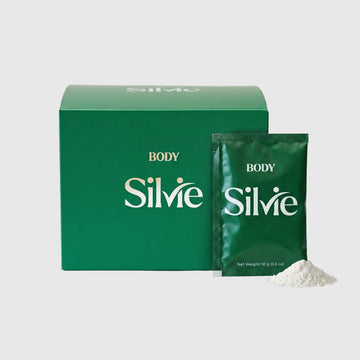
That is the thinking behind Silvie Body: begin with the daily creatine dose that makes sense for women over 55, then build the surrounding system in one routine.
Silvie Body comes in 28 daily sachets, is made in the EU to GMP standards, and is independently batch tested. The formula was developed with a library of more than 200 scientific studies.
An honest note
Silvie Body does not replace a protein-rich diet. If reaching your daily protein intake is difficult, pair it with complete dietary protein or consider Silvie Body Pro.
Creatine deserves attention after 55
Not because women over 55 need to become different people. Because staying active asks muscle to keep showing up.
Creatine offers a well-studied way to support the short-burst energy behind strength training and everyday effort. Three grams keeps the dose purposeful and comfortable. Resistance exercise makes it useful. Protein, bone and connective-tissue support make the plan more complete.
The goal is not to chase a trend. It is to keep more capacity for the life you already have, and the life you still want to build.
References and further reading
The page copy is written for a general audience. The sources below include research reviews, clinical trials, safety analyses and the EU register of authorised health claims.
Show all 11 sources
Disclaimer
This guide is for educational purposes and is not medical advice. Food supplements should not be used as a substitute for a varied, balanced diet and healthy lifestyle. Speak with a qualified healthcare professional before beginning a supplement if you have a medical condition, are pregnant or breastfeeding, take regular medication, or have concerns about kidney health. Stop use and seek advice if you experience a persistent adverse reaction. Before publication, check all health claims and product wording against the final market, label and current formula.
























